
AgriKonnekt links climate sensors, verified farmer identity, and market access into one system, engineered with consumer-grade rigor and measured by one thing: what changes for the child in the household behind every harvest.
Explainable 24-point credit score from 8 everyday signals. Query the model or try the live demo.
Composite nutrition, school continuity and climate shock score, fed by a live weather feed. Try the explorer.
Hazard maps and early warning built off the same verified household record, before the shock lands.
How the platform maps onto the five priorities every child focused funder is already scored against.
Courts, coaches, mentors and vocational pathways, the sister initiative for a child's life outside the farm.
More than 75% of Kenya's food comes from smallholder farms. These families face droughts, irregular rainfall, livestock disease and soil degradation, then lose up to 30% of harvest value before it ever reaches a buyer. That lost value is a missed meal, a delayed school fee, a postponed clinic visit.
Weather, financing, logistics and market access have always run as separate, disconnected tools. Farmers piece it together alone, and children absorb whatever falls through the gaps. Every harvest on this platform carries a traceable labour record, so a child's work is never mistaken for an adult's.
AgriKonnekt closes that gap: one connected system for the families the formal economy overlooks, built around a single rule. A child's daily wellbeing sits at the centre of every decision the platform makes.

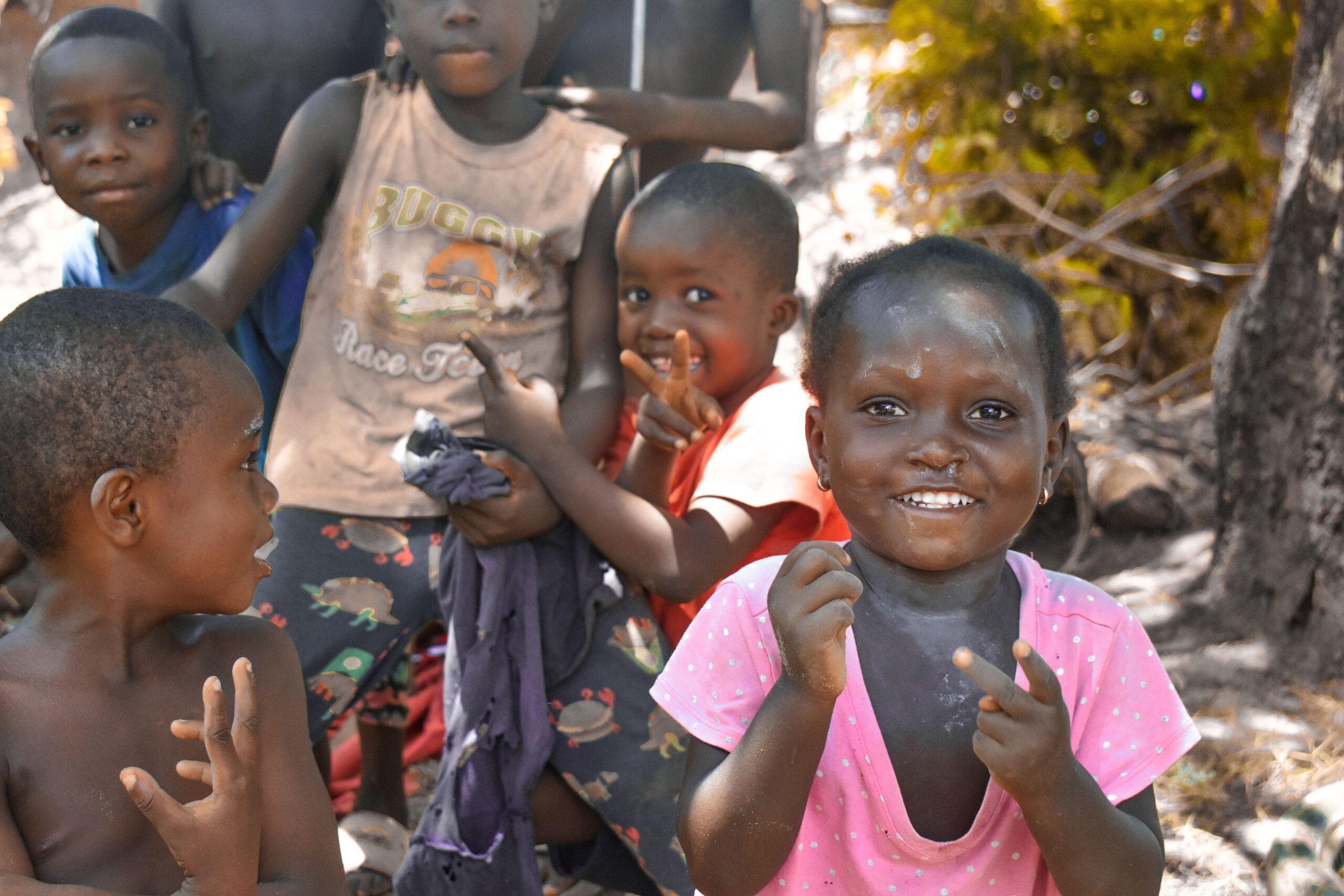
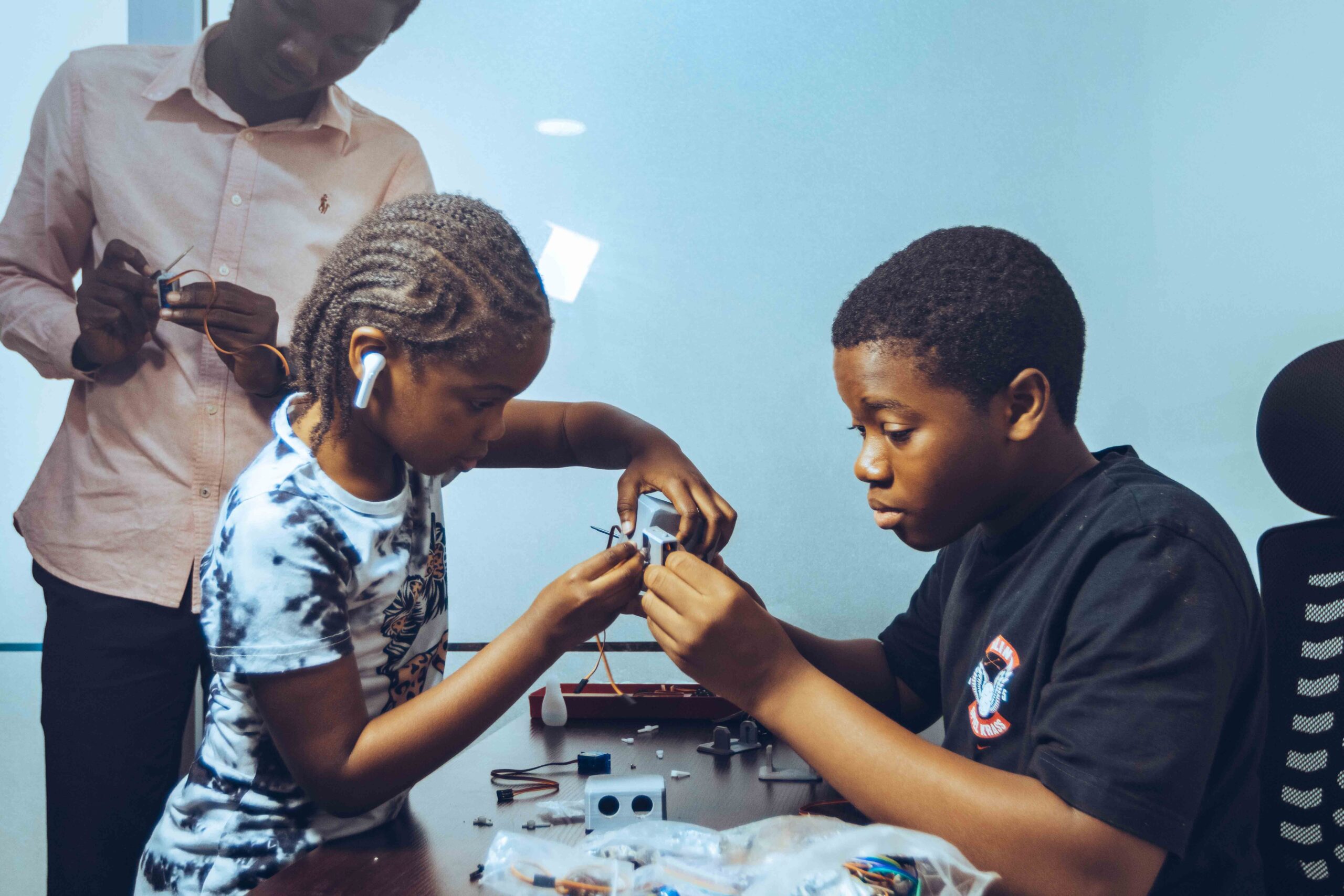
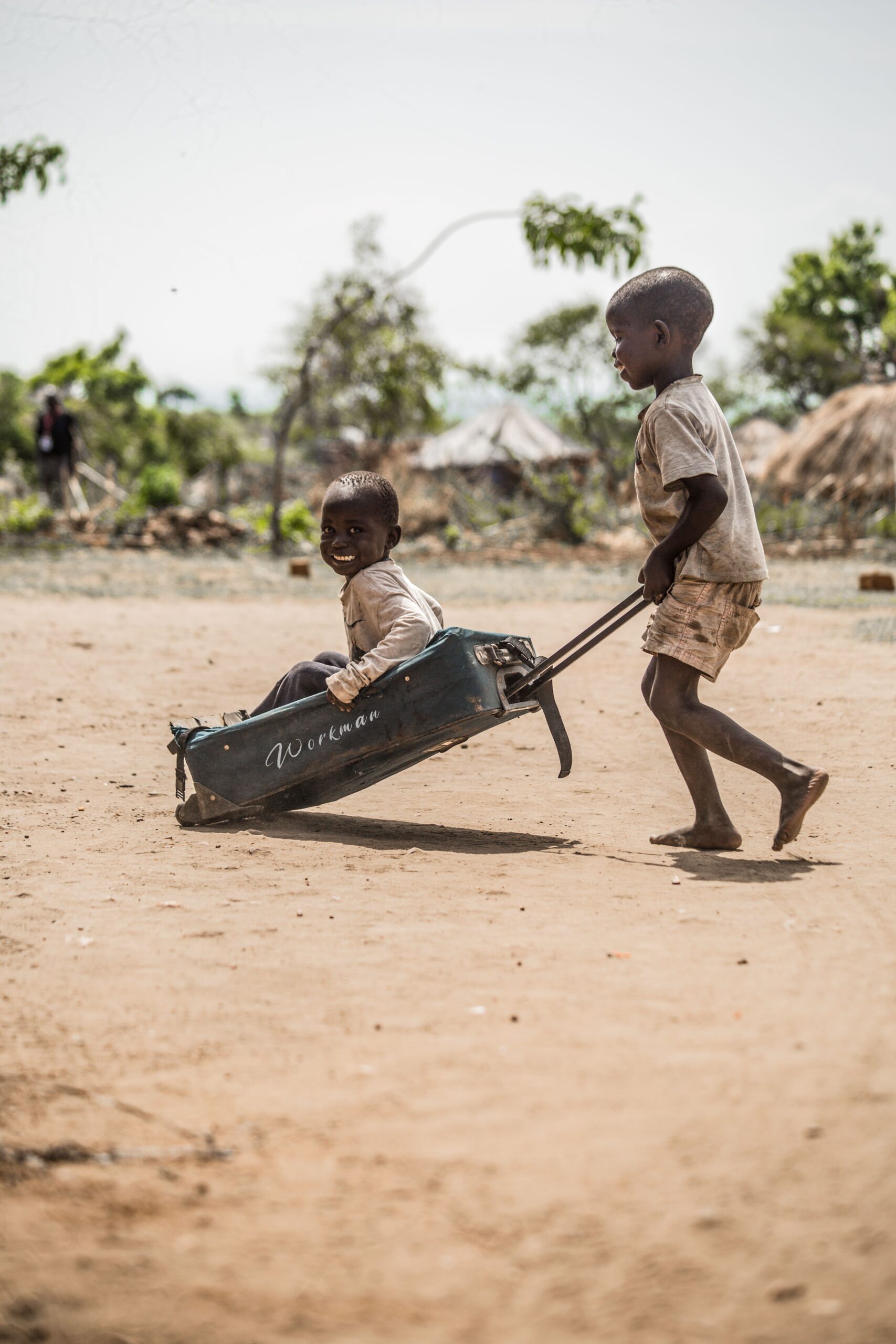
AgriKonnekt is the harvest. What happens behind the numbers, what a child does after school, and whether a household gets a warning before the next shock all matter just as much. One verified household record opens every door below, protecting a child from exploitative labour first, then carrying that household into finance, education, sport, and climate resilience.
One live composite score built from food security, school versus labour risk, and climate shock exposure, fed by a live weather feed and open for any partner to query directly.
The same verified household record turned into hazard maps, early warnings, and health surge forecasts, so a family hears about the flood, heat wave, or outbreak while there is still time to prepare for it.
An explainable credit score built from eight everyday signals, mobile money, airtime, cooperative savings, utility repayment and verified farm data among them, streaming in real time exactly as it lands in the field.
How this platform maps onto the five things every child focused funder or implementer already shows up for, health, nutrition, education, water and emergency response, and the funding mechanisms built to back exactly that.
Courts, coaches, mentors, arts and vocational pathways, plus a new education hub with cooperative partners upskilling youth in agribusiness. See the evidence, the ecosystem, and the gaps we are closing.
Seven chapters trace the same journey every pilot family makes, from a child waking up to a farm nobody can vouch for, to a piece of technology the next county can simply inherit and put to work on its own terms.
No sensor, ledger or lender has yet recorded anything about this farm. Every decision this year rests on memory and guesswork, and the child's routine, school fees, meals, medical care, moves with whatever the season decides.
This is exactly the gap AgriKonnekt was built to close. A track record anyone can verify is what lets a household secure insurance, borrow on fair terms, and prove to a buyer that what they are growing deserves to be paid for properly.
Low cost IoT sensors, satellite imagery and drone diagnostics begin tracking soil, crop health, livestock risk and weather. Findings return through low bandwidth dashboards and SMS, built for the connectivity rural Kenya actually has.
Verification is aggregated at the cooperative level and cryptographically anchored, so the record cannot be quietly altered later by whichever party benefits most from doing so. For the first time, the farm exists as a legible economic actor.
A market coordination engine connects producers directly to buyers, optimises logistics, and removes the layers of informal intermediation that historically ate the difference between farm gate price and market price.
This is the chapter the entire platform is measured against. Fewer harvest emergencies, steadier school fee payments, and fewer days a child spends pulled into harvest stress labour rather than a classroom.
Everything built along the way, the verification protocol, the sensor firmware, the coordination engine, ships under an open licence, so the journey does not have to be paid for twice by the next community that needs it.
AgriKonnekt consolidates five systems built in isolation from one another, climate intelligence, farmer verification, AI powered credit scoring, market access, and impact tracking, into one platform, delivered over the SMS and low bandwidth channels that actually work in rural Kenya rather than the connectivity a lab assumes. Every system below exists for one reason: a child's next meal should depend on a single, reliable record, rather than on five separate tools happening to sync up.
That fragmented stack is exactly what already exists, and it is exactly the gap the problem statement describes. Each tool below solves one slice well, in complete isolation from the other three.
IoT sensors, satellite data and drone supported diagnostics track crop health, soil condition, livestock risk and weather exposure, continuously and in the field. It is an early warning system, so a bad season gets caught before it becomes a bad year for a child at home.
A verified production identity for every farmer and cooperative, enabling traceability, buyer trust, and access to climate finance and insurance on fair terms. For a household, that is the difference between being invisible and being able to plan.
An explainable credit model built on mobile money history and airtime patterns, the record this household has in place of a bank statement. Savings and repayment discipline weigh as heavily as credit signals, so lenders, SACCOs and insurers plug into it to reach farmers everyone else calls "unbanked," on terms sized to what a household can carry.
Producers reach aggregators and institutional buyers directly, with logistics optimised to reduce losses that occur after harvest and close market inefficiencies, so the value recovered flows straight back into the household itself.
Publicly exposed, continuously updated impact data, income, resilience and emissions proxies, measurable by funders, insurers and policymakers alike, so a claim that the platform is helping children can be independently verified rather than taken on trust.
Smallholder households without documented income are the population every formal lender writes off, and that exclusion is exactly where risk concentrates around a child. When a shock hits, a rejected loan or a bad season with no cushion, an unbanked household turns to informal lenders at extortionate rates, a distress sale of livestock, or pulling a child out of school. A credit score is the mechanism standing between a bad season and a child's future paying for it.
Financial inclusion has earned some scepticism, and rightly so: broad reviews of credit access programmes show small, inconsistent effects, while savings consistently show the more reliable gains for a poor household. This system was built with that evidence in mind. Cooperative and group savings sit on equal footing with credit signals, and the score exists purely to widen what a household can already prove about itself.
The real innovation is the data source: deliberately spread across signals rather than resting on one. A rural household without a bank account almost always has a phone, often belongs to a savings group, and pays for utilities on some kind of schedule. Mobile money history, airtime patterns, cooperative savings, and pay-as-you-go repayment exist for nearly every one of them, generated automatically and updating in real time, where a bank statement never existed. Eight independent signals keep the score fair when any one goes quiet for a season.
Most credit models measure a single moment and freeze a household there; this one is built to measure direction instead. The score runs on a 120-point scale across twelve equally weighted metrics, scored 1 to 10 each, and every metric tied to a child's day to day life is structured so it can only ever add to the total. Retraining happens every quarter, aimed squarely at catching more families climbing.
Illustrative only. Every household's actual factor scores are computed directly from its own verified data.
This unfolds continuously rather than on a single form filled out once, the same twelve metrics compounding as a household's record deepens and unlocking more each year.
Production history and baseline child indicators, enrollment, legal identity, are captured for the first time. The household qualifies for its first fair rate microloan, small enough to be safe, large enough to matter. A missed clinic visit simply flags a health partner to follow up before the season ends, at no cost to the family.
Savings trajectory and nutrition trend both start counting for the first time, alongside continued school continuity. The credit limit grows, the interest rate drops, and the household gains access to weather index insurance for the first time, cushioning next season's drought before it becomes this year's crisis.
Multi season resilience and verified asset growth unlock financing for the input package that lifts yield past subsistence into surplus. Every child in the household is enrolled and documented, and the family's own record becomes something they build on year after year, compounding rather than resetting each season.
The score is designed to notice a family getting better and keep opening doors as they do, carrying that progress forward rather than starting the same questions over again next year.
Every institution downstream of a farmer, a lender, an insurer, a buyer, is really just asking one question. Can this be trusted. Before verification, the honest answer is silence.
A household making every decision on memory, and absorbing every shock alone.
A household visible to the systems built to protect it, for the first time.
Every verified record inside AgriKonnekt carries its origin with it, from the household that produced it all the way through to the buyer who eventually pays for it. That traceability serves a purpose well beyond proving what was grown: it is the mechanism that keeps a child out of harvest labour meant for someone older, holding every link in a supply chain accountable for what happens along it.
Those pathways live on their own pages, one for household finance, one for education and child aid, one for sport and community development, and one for climate and health resilience, and every one of them starts from the same verified, traceable household record.
These are the targets for the first year, backed by real data updated continuously through active fieldwork. Every number below stands in for what a child in that household gets to keep that year.
Targets will be finalised against baseline pilot data and updated every quarter once fieldwork begins.
Every gain above compounds into what a child in that household needs to develop: stable nutrition, uninterrupted schooling, and a home standing well clear of the next drought's reach. Stronger farmer incomes are among the most direct paths a child protection agenda has into rural wellbeing.
Because the data layer is public and continuously updated, it functions as a living measurement system rather than a survey conducted once and archived, one that UNICEF, other humanitarian agencies and partner institutions can query at any time.





Every goal in this grid leads back to the same place, a child, growing up somewhere the system finally reaches.
of harvested value, recovered back into the household, one verified farm at a time
This platform functions as a dense, living web rather than a tidy org chart, nine categories of partner pulling in from every direction, tied to each other as much as to the platform at the centre, all of it converging on the same household.
The source of truth for every record in the system, and the group whose trust determines whether verification is adopted rather than resisted. Murang'a Farmers Cooperative Union is the planned site of the platform's first Education Centre of Excellence, training the youth who will run these systems next.
The local layer of trusted peers who cross check a record before it ever reaches a funder or a lender, catching details a form alone would miss.
The existing government channel through which agronomic advice already reaches communities, and the natural home for long term platform stewardship.
The regional agricultural and child wellbeing agendas this platform was built to plug into directly, rather than operate alongside as an afterthought.
The institutions that convert a verified record into an actual loan, premium or payout, turning data into a household's working capital.
The market side of the same relationship, paying a fairer price once a harvest and its origin can actually be verified.
The distributed group of engineers who audit, harden and extend the codebase once it is released publicly under an open licence.
The outside reviewers who keep the public data feed honest, so impact figures are verified rather than merely self reported.
The reason the other eight relationships exist at all, and the measure every quarterly update is ultimately written for.
Sub Saharan Africa holds some of the largest reserves of uncultivated arable land in the world, and Kenya sits inside a continental agenda that already names agricultural transformation and child wellbeing as core promises. AgriKonnekt was built to deliver directly on that promise.
Aspiration 1 calls for prosperity built on inclusive growth and sustainable development, and Aspiration 6 calls for people driven development that relies on the potential of African people, especially women and youth, and cares for children. Verification gives both a measurable data backbone.
Supports the continental commitment to end hunger and halve losses that occur after harvest, by building the traceability and market linkage infrastructure that CAADP targets already assume exists.
Directly supports the Agricultural Sector Transformation and Growth Strategy's push for climate smart, technology enabled, market linked farming under the Bottom Up Economic Transformation Agenda.
Contributes to regional food security and industrialisation goals by building interoperable data infrastructure that can scale across East African Community member states.
Onboard priority cooperatives, issue digital farmer identities, and capture baseline household and climate risk data across target counties.
Deploy IoT and satellite monitoring with SMS advisory across pilot sites, and open the real time public data feed for external review.
Connect verified farmers to aggregators, buyers and finance or insurance partners, and publish the first quarterly impact update.
Publish the full BSD, CERN and CC BY licensed release, document lessons for replication, and prepare a scale up plan across additional counties and East African Community states.
Building on Year One's verified household data, an education hub at Murang'a Farmers Cooperative Union upskills high schoolers and post secondary youth in agribusiness, with sport, nutrition and meals as the incentive that keeps them enrolled. AgriKonnekt leads as tech partner, building the human capital, entrepreneurs and future corporate leaders, that the whole agri value chain needs, from smallholder farmers and cooperatives to supply chain players and exporters.
Targeting is deliberate. The households least visible to formal systems are the ones most exposed to climate shocks, and the ones where a child pays first when a harvest fails.
Six requirements decide whether an Expression of Interest gets reviewed at all. Here is exactly how Kilimora and AgriKonnekt meet each one, answered plainly for the reviewer.
Kilimora is registered as a private company, the fund's first entry point.
Incorporated in Kenya, a confirmed UNICEF programme country with an already established track record.
Software under BSD 3-Clause, hardware under CERN Open Hardware Licence, design and content under CC BY 4.0, live in the release today.
AgriKonnekt runs live in Kenya today, with households, farm records and cooperative pilots on the platform, and an architecture built to scale straight across Sub-Saharan Africa.
Every system on the platform, credit, climate, school continuity, is scored and routed toward the households a child's daily wellbeing depends on most directly.
Live feeds and an open API expose the same data a reviewer can independently verify in real time.

Copyright in the underlying code exists automatically from the moment it is written, with registration entirely optional. The licences below stand as an explicit, standing grant of permission for open, public reuse.
| Software | BSD 3 Clause License, open source and OSI principles designed, with the full text included in the project's LICENSE file. |
| Hardware | CERN Open Hardware Licence, applied to the IoT sensor and diagnostic device designs. |
| Design & content | Creative Commons Attribution 4.0 International, applied to documentation, design assets and written content. |
AgriKonnekt is a working platform already in active use today.
Every layer, code, hardware designs and content, is OSI principles designed or released under a CC BY licence.
Impact data is publicly exposed in real time and stands up to independent verification.
Anyone, anywhere, can inspect, adapt, and build freely on the platform.
agrikonnekt.kilimora.africa is Kilimora's commercial enterprise platform, the product that pays for the team and keeps this work funded past any single grant cycle. What is proposed to the Innovation Fund is a distinct, separable layer: the specific components a child's safety and a household's climate exposure depend on, released under open licence so they stand independently of Kilimora's future as a company.
Forkable and independently inspectable by any ministry, NGO, or competitor, regardless of where Kilimora stands as a company five years from now.
What a paying cooperative, lender, or aggregator actually needs day to day, and the revenue that funds continued maintenance of the open layer beside it.
This is the standard open core structure: the components a public funder should be able to trust regardless of Kilimora's commercial fortunes are licensed openly and forever, while the infrastructure a paying enterprise customer needs stays commercial, fully separate from anyone's ability to inspect, self host, or build on the open layer.